

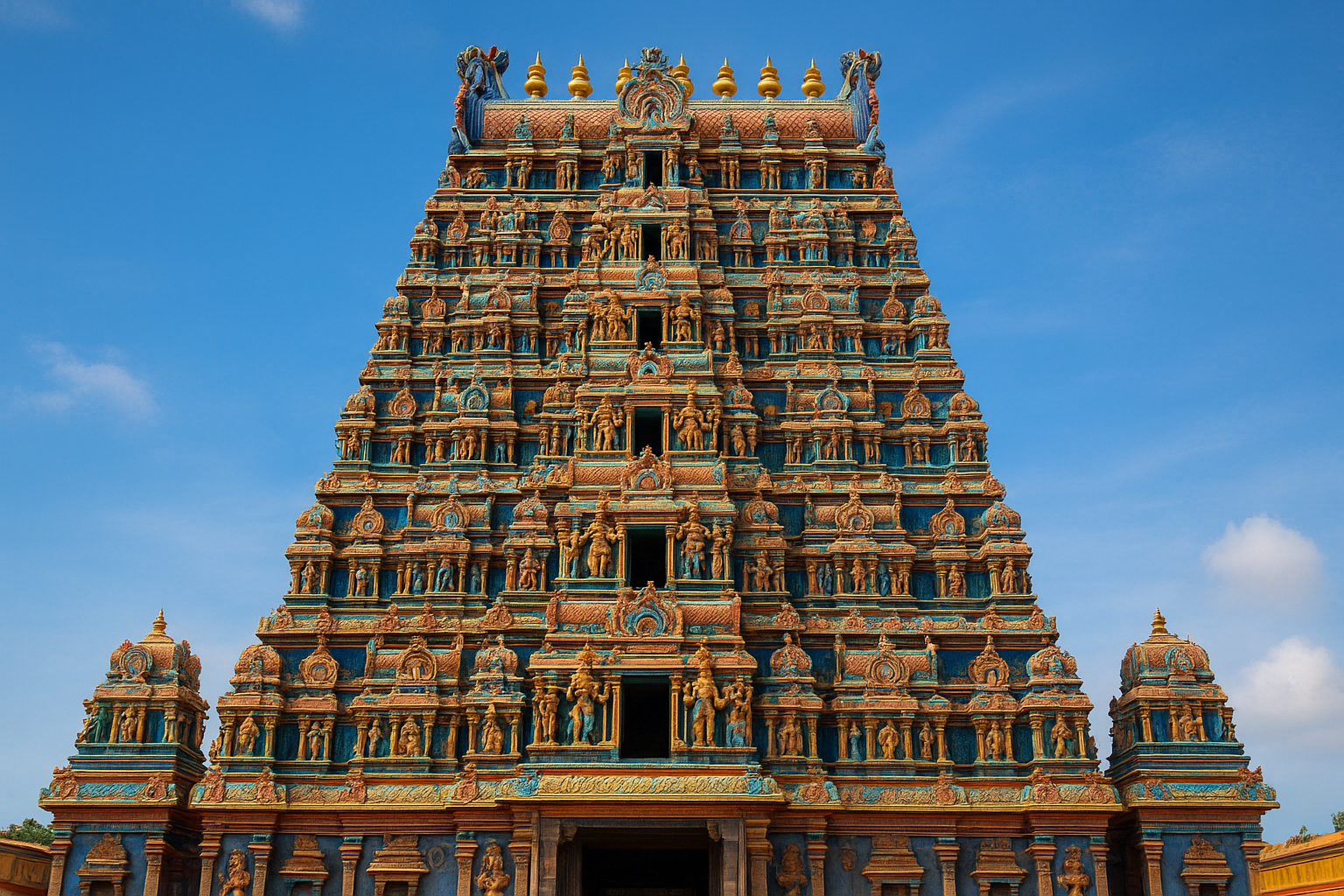
Across India and much of Asia, Hindu temples—known as mandirs—stand as living symbols of a civilization that has evolved for over 3,000 years. They are not only places of worship but also centers of art, community, culture, and history.
According to Encyclopaedia Britannica, a Hindu temple is “a structure designed to bring humans and gods together using symbolism, geometry, and ritual.” But for devotees, a mandir is also deeply personal:
“A mandir is a place where the noise of life fades, and the inner self finally speaks.”
Temples are designed to make divine presence accessible, concentrating spiritual energy through geometry, sacred ratios, consecration rituals (prana-pratishtha), and symbolic architecture.
What Is a Hindu Temple?
A Hindu temple (mandir) serves as a sacred space where humans encounter the divine. In Hindu philosophy, Brahman (the ultimate reality) is everywhere (sarvatra) and within each individual (antar-yami), yet temples provide a focused environment for spiritual practice.
The design often guides the devotee inward—from the pillared halls (mandapa) to the innermost sanctum (garbhagriha)—symbolizing a journey from the external world toward inner consciousness.
Historical Evolution of Hindu Temples
Early Worship (Pre–5th Century CE)
Before large stone temples, Hindu worship occurred at sacred trees, rivers, caves, and small shrines. Archaeological findings indicate terracotta figurines, ritual altars, and simple shrines, representing the earliest forms of sacred architecture.
Temple Construction Emerges (5th–7th Century CE)
Large-scale temple building began “in earnest” during the Gupta period. Early structures included sanctums (garbhagriha), flat-roofed halls, and simple towers, laying the foundation for later architectural complexity.
Classical Temple Era (8th–12th Century CE)
Regional styles flourished under royal patronage:
-
Nagara (North India) with pointed shikharas
-
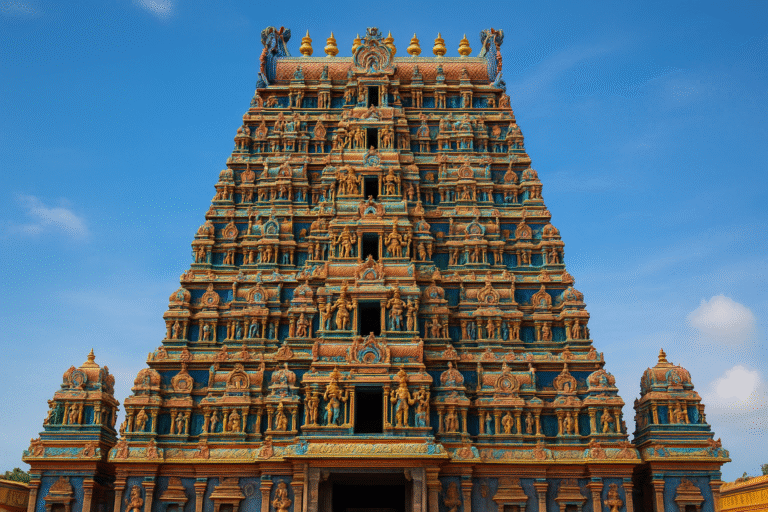
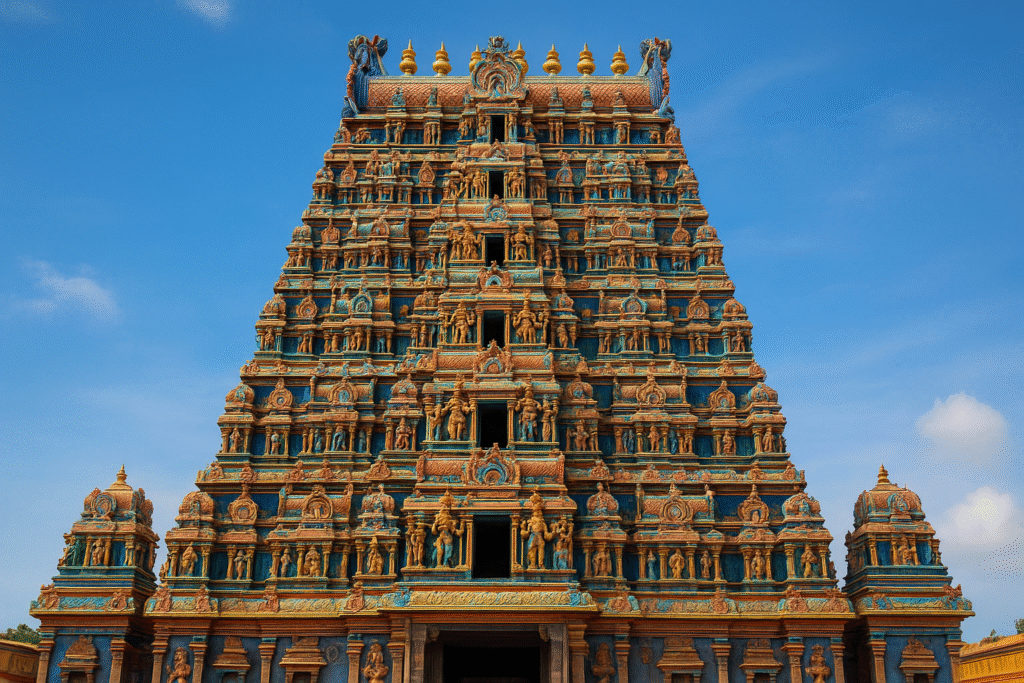
Dravida (South India) with pyramidal vimanas and gopurams
-
Vesara (Deccan) blending features of both
Temples became hubs for religion, art, and learning.
Temples as Cultural Hubs (10th–16th Century CE)
Temples historically served as centers of education, performance, and social activity. They often supported musicians, dancers, scholars, and artisans, hosted festivals, and in some cases owned land and facilitated charity, particularly in large temple towns.
Influence of the Bhakti Movement (7th–17th Century CE)
The Bhakti movement made temple worship more personal and emotional, emphasizing devotion to a chosen deity (Ishta Devata). Saints like Mirabai, Tulsidas, and the Nayanmars & Alvars popularized devotional songs and poetry, enriching temple culture.
Symbolism of Hindu Temples
Hindu temples are designed to represent the cosmos and spiritual ascent:
-
Garbhagriha (womb chamber) symbolizes the universe’s creative core
-
Tower (Shikhara/Vimana) represents Mount Meru, the cosmic axis
-
Mandapa (pillared hall) is the transitional space for worshipers
-
The temple layout often follows a mandala for cosmic and spiritual alignment
Key Terms
| Term | Meaning |
|---|---|
| Garbhagriha | Sanctum sanctorum of the deity |
| Mandapa | Pillared prayer hall |
| Shikhara / Vimana | Tower over the sanctum |
| Gopuram | Monumental gateway (South India) |
| Pradakshina Path | Circumambulation path |
| Aarti / Deepam | Ritual light offerings |
Architectural Styles
Nagara (North India)
-
Curvilinear shikhara, square sanctum, sculptural bands
-
Examples: Khajuraho Temples, Konark Sun Temple
Dravida (South India)
-
Pyramid-shaped vimana, massive gopurams, temple tanks
-
Examples: Meenakshi Temple (Madurai), Brihadeeswarar (Thanjavur)
Vesara (Deccan)
-
Hybrid of North and South features
-
Examples: Hoysaleswara (Halebidu), Chennakesava (Belur)
Other Regional Variations
-
Kerala: Wooden structures with sloped roofs
-
Bengal: Terracotta temples, curved roofs
-
Nepal: Pagoda-style shrines
-
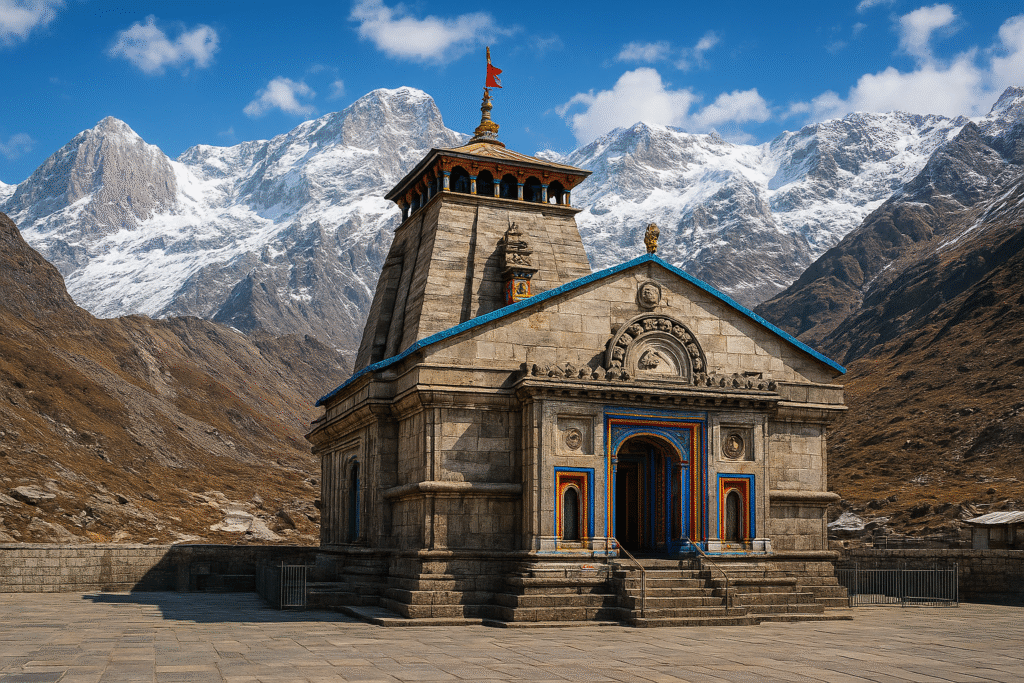
Himalayan Belt: Stone and timber hybrids
Rituals and Practices
-
Darshan: Seeing the deity and being spiritually “seen”
-
Puja: Offering flowers, lamps, and incense
-
Pradakshina: Clockwise circumambulation around the sanctum
-
Aarti: Ritual of waving lamps with prayers
-
Prasadam: Sacred food offerings
-
Festivals: Diwali, Navratri, Mahashivratri, Rath Yatra, Janmashtami, Pongal
Must-Visit Hindu Temples
🇮🇳 India
-
Kashi Vishwanath (Varanasi): Heart of Shiva worship
-
Meenakshi Amman (Madurai): Dravidian architecture
-
Tirupati Balaji (Andhra Pradesh): One of the world’s busiest temples
-
Somnath (Gujarat): Rebuilt repeatedly, symbol of resilience
-
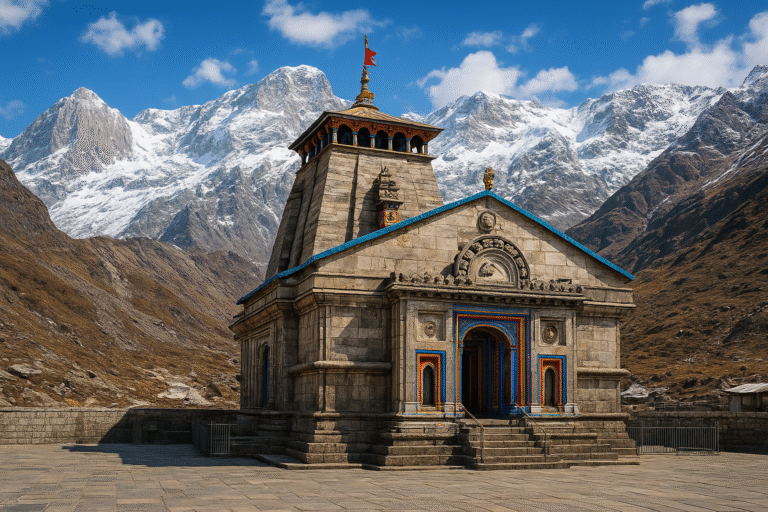
Kedarnath (Uttarakhand): Himalayan serenity
-
Jagannath Temple (Puri): Famous for Rath Yatra
Outside India
-
Pashupatinath (Nepal): UNESCO World Heritage site
-
Angkor Wat (Cambodia): Originally a Vishnu temple, largest religious monument
-
Prambanan (Indonesia): 9th-century Hindu architecture masterpiece
-
Batu Caves (Malaysia): Cave shrine dedicated to Lord Murugan
Temples as Cultural and Social Hubs
Temples historically shaped communities:
-
Supported classical arts: dance and music
-
Acted as charity and educational centers
-
Hosted festivals, gatherings, and markets
-
Influenced city planning and regional identity
FAQ Section (SEO Optimized)
1. What is the purpose of a Hindu temple?
To connect humans with the divine through darshan, puja, and meditation, and symbolically represent the cosmos.
2. What are the main architectural styles?
Nagara (North), Dravida (South), Vesara (Deccan), Kerala, Bengal, Nepal pagoda-style.
3. What rituals are performed in temples?
Darshan, puja, aarti, pradakshina, offering prasadam, and festival participation.
4. Can non-Hindus visit temples?
Many do, though some major temples have restrictions (entry for Hindus only or dress codes).
5. Which temple is considered the oldest?
Temples like the Shore Temple (8th century CE) are among the oldest surviving stone temples; Mundeshwari Temple in Bihar is claimed locally to be older, though sources vary.
6. Why do devotees walk clockwise around the sanctum?
Symbolizes centering life around the divine while moving through the world.
7. Why are South Indian temples unique?
Large gopurams, temple tanks, enclosed complexes, and rich Dravidian sculpture.
Conclusion
Hindu temples are living stories in stone, cosmic symbols, cultural hubs, and spiritual sanctuaries. Visiting a mandir connects you to history, architecture, devotion, and community, offering both awe and inner peace.
“In every mandir, there is a piece of peace waiting for you.”



One Response